 |Investor Briefing · Confidential
Elite coaching marketplace + SaaS platform. Free for coaches — monetised through athletes.
- ·Coaches get enterprise software at zero cost — removing the #1 barrier to supply growth
- ·Athletes pay memberships (Bronze/Silver/Gold) to access curated elite training content
- ·Nine revenue streams layer on top: marketplace, AI credits, B2B, enterprise, 1:1, and more
- ·Network effects compound: more coaches → more athletes → coaches earn more → repeat
From a single membership, athletes can access a range of training content from truly elite level coaches.
Just as Spotify pays artists per stream, Pod1um pays coaches based on athlete engagement — through the Watts Engine, our activity-based reward system.
- ✓Supply moat: Free software means coaches choose Pod1um first — competitors charge €100–€500/month
- ✓Bottom-up growth: Pod1um doesn't buy athletes directly. Win the coach, and each coach brings their own roster — scaling athlete acquisition at zero marginal cost.
- ✓Distribution engine: Featured coaches co-promote with their elite athletes, investor-athletes promote under commercial agreements, and brands push our content to their customers — marquee reach at near-zero CAC.
- ✓Built with the best: Developed in active collaboration with elite coaches and athletes — not designed in a boardroom. The product works because the people it was built for helped build it.
- ✓Pulse AI: Encodes each coach's methodology, and uses all available data to help inform decisions for both coaches and athletes
- ✓Data moat: Every session logged makes Pulse AI smarter. Competitors can copy features — they can't copy the proprietary training data that widens this advantage with every athlete on the platform.
- ✓Elite backing: Gerrard, Oxlade-Chamberlain, Welbeck, Dembele + more
- ✓Real traction: 16k athletes & €175k+ revenue before full launch — demand is proven, not theoretical
Ready to go deeper? Explore the full investor briefing below.
Free tools for coaches. Athletes follow. The marketplace compounds.
Pod1um is a two-sided marketplace and SaaS platform that connects Featured elite coaches with athletes of all standards. The platform gives coaches enterprise-grade software — coaching tools, client management, content publishing, AI analytics — entirely free. In return, Pod1um becomes their business infrastructure and captures value from every transaction that flows through it.
On the athlete side, Pod1um is a curated marketplace where athletes discover, follow, and purchase training programmes, consultations, and memberships from the world's best sport-specific performance coaches. As the platform grows, network effects compound: more coaches attract more athletes, and more athletes make coaching on Pod1um even more valuable.
- 01
Coaches get a best-in-class athletic OS — free
Pod1um is purpose-built for high-performance coaching: advanced programming and periodisation, real-time performance and recovery monitoring, AI-assisted session generation, and analytics down to the set-and-rep level — designed specifically for prescribing and tracking serious athletic training, not generic gym workouts. Competitors charge £100–£500/month for one-size-fits-all seat-based tools; Pod1um delivers a superior, sport-specific platform at zero cost. Supply unlocks on both product and price.
- 02
Coaches bring their athletes in bulk
Coaches arrive with audiences. Each Featured coach migrates their existing roster onto Pod1um in their first week — dozens to hundreds of athletes onboarded per coach at zero acquisition cost. Beyond the roster, a single coach-led campaign, athlete co-promotion, or brand collaboration can put Pod1um in front of thousands of new athletes overnight. Demand-side growth scales with supply — every new coach is a distribution channel that compounds.
- 03
A % of athletes convert to paid members
Athletes subscribe to membership tiers (Bronze, Silver, Gold) to access premium training content from their coaches. The base case requires just 2.1% to convert — roughly 7 per Featured coach. The Watts Engine pays 50% of membership revenue back to coaches.
- 04
Nine reinforcing revenue streams
Marketplace commissions, AI credit purchases, private athlete hosting, B2B enterprise licences, 1:1 coaching, coach premium subscriptions, team/club sales, and whitelabelling all layer on top of the membership base — each stream reinforcing retention for the others.
- 05
AI compounds the moat
Pulse AI encodes each coach's unique methodology and applies it automatically at scale. Motion analysis, adaptive workout generation, and performance monitoring lock athletes into their coach's ecosystem and raise switching costs with every session logged.
The bottleneck was never demand.
It's access. In amateur sport, studies have found over half of athletes have no access to a dedicated strength & conditioning coach, and detailed, sport specific programmes remain a privilege of the elite tier. The appetite is there. The infrastructure to deliver expert coaching at scale isn't. Until now.
Monthly recurring revenue from athlete/team memberships, and marketplace transactions.
Actuals to date, not projections. Sign-ups and revenue are platform-recorded; CSAT from 2025 in-app user surveys; churn measured on paying members.
Elite coaches. Short contracts. No fallback. Until now.
Professional sport runs on short-term contracts. A change of manager, an end-of-season budget cut, a club restructure — any one can leave even the most elite performance specialist out of a role, with no warning and no runway. Pod1um changes that equation.
- —Year-to-year contracts are the norm — even at the highest level of professional sport
- —Staff turnover follows management changes, not performance records
- —Gaps between roles can stretch to 6–12 months with no active income
- —No platform infrastructure, no client base, no revenue stream waiting when the call comes
- —The best coaches in the world are one boardroom decision away from zero earnings
- ✓Build passive income while still employed — sell training content, programmes, and IP from inside a full-time coaching role
- ✓Earn in the background — content and expertise earning quietly, with no extra hours
- ✓Scale up instantly if a role ends — switch on 1:1 coaching, consultations, and live sessions the moment you need them
- ✓No cold start — a Featured profile and athlete following are already built; nothing to rebuild from scratch
- ✓Built-in retention driver — coaches stay on Pod1um because the platform keeps earning even when their primary contract ends
Passive income from content sales, Watts pool payouts, and training plan purchases. The platform earns in the background — zero time away from the day job required.
Immediately activate 1:1 coaching, consultations, and live sessions. An established Pod1um profile means athletes are already there — income scales up the moment capacity opens.
A growing coaching business that compounds over time. Every piece of content sold, every athlete coached, every review earned makes the platform more valuable — regardless of what happens in professional sport.
Why this matters for retention: Elite coaches who build a Pod1um business while employed have every reason to stay on the platform — and every reason to deepen their presence. Income security is not just a coach benefit; it is a structural driver of our 100% Featured-coach retention rate to date.
Aligned by Design: Inverting the Legacy SaaS Model.
Competing platforms charge £100–£500/month in seat or per-athlete fees, pricing out independent coaches, schools, sports clubs, and teams. Pod1um restructures the economics: coaches join free, with unlimited tools and no roster-based costs. We only monetise when coaches do — incentives aligned from day one. With 16,000+ active athletes and the vast majority of non-elite athletes still underserved, coaches enter a marketplace with built-in demand. And no Featured coach has ever left: 100% retention to date, driving compounding supply growth.
Six tailwinds converging in Year 1 (post-raise)
The conditions that make Pod1um possible — and timely — have never been better aligned.
A multi-billion market with no clear winner
The global sports training, coaching, and athlete analytics market is growing at 5–8%+ CAGR. No platform has yet unified coach software, athlete marketplace, and AI into a single free-to-join product purpose-built for performance sport.
Market estimates based on Allied Market Research, Mordor Intelligence, Fortune Business Insights, Data Horizon, Grand View Research, MarketsandMarkets and management analysis. SOM reflects base-case 5-year model projections. Click any card for breakdown and sources.
Coach acquisition by channel
New coach sign-ups by channel, per year. Organic, paid, and referred coaches enter as free and graduate to Featured over time — building platform supply at low cost. Sales-led pro coaches onboard as Featured directly, generating revenue from day one.
| Channel | Year 1 | Year 2 | Year 3 | Year 4 | Year 5 |
|---|---|---|---|---|---|
Paid Marketing | 75 | 194 | 414 | 889 | 1,440 |
Referral Programme | 231 | 557 | 1,284 | 2,915 | 6,403 |
Organic / SEO | 3 | 7 | 13 | 26 | 53 |
Sales Team | 50 | 60 | 95 | 120 | 120 |
Word-of-mouth compound Existing Unfeatured-coach base × ~2.5%/mo · unattributed organic growth | 147 | 342 | 794 | 1,819 | 4,036 |
| Total new sign-ups + compound growth | 507 | 1,158 | 2,600 | 5,770 | 12,053 |
| ↳ of which graduate to Featured | 41 | 96 | 222 | 509 | 1,130 |
| Featured coaches at year-end | 119 | 281 | 612 | 1,268 | 2,572 |
| Unfeatured coaches at year-end | 738 | 1,734 | 4,002 | 9,117 | 19,868 |
Marquee reach, near-zero CAC
Beyond the coach-led flywheel, three demand-side channels pull athletes onto the platform through people and brands who already command enormous audiences. Each is contractual or built-in — distribution we don't have to buy. The model counts only a tiny fraction of these audiences as conversions, so the upside is deliberately understated.
Five reinforcing growth pillars
Each pillar feeds the next — free software drives supply, supply drives demand, demand drives revenue, revenue funds the brand.
Built by operators, backed by champions
Founders who lived the problem, and elite-sport investors who understand what Pod1um is building.

- ·15 years of business experience — founded and managed AXSOM Sports, an athletic training centre in the west of Ireland, for 10 years before founding Pod1um
- ·Identified the market gap through four years of hands-on experimentation and validated the concept across multiple platforms before founding Pod1um in May 2020
- ·Completed all three phases of Enterprise Ireland's New Frontiers accelerator programme
- ·Product-led operator and builder with responsibility for platform strategy and monetisation
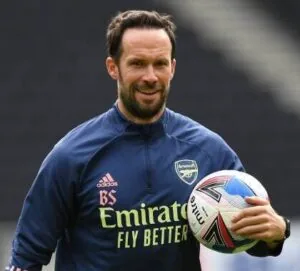
- ·Elite-level coaching career spanning multiple sports — clients include Arsenal FC, the Polish National Team, Olympic Gold medallist Katie Taylor, and Major champion Shane Lowry
- ·Deep understanding of high-performance coaching and the commercial opportunity for elite coaches to scale and monetise their expertise
- ·Recognised the challenges elite coaches face in turning specialist knowledge into scalable digital businesses
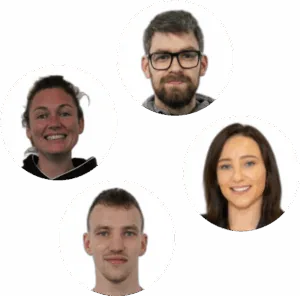
- ·Leads pro coach network expansion and strategic partnerships


Nine streams. Zero friction.
€32.0M by year five.
Coaches are the distribution. Athletes are the monetisation. Pod1um gives every coach enterprise-grade software for free — capturing supply at zero friction — then unlocks nine reinforcing revenue streams as athlete engagement grows.
All figures above are financial projections built on early-stage KPIs, pre-launch user data, and management assumptions. They are not a guarantee of future performance. Actual results may differ materially.
The market is ripe for disruption
- ✗Subscription-based — £100–£500/month for >30 athletes
- ✗Designed for general fitness & health coaching, not athletic performance
- ✗No athlete-facing monetisation; coaches are a cost centre
- ✗Zero network effects — siloed, single-sided products
- ✓Free for coaches — zero financial barrier to entry at any level
- ✓Curated marketplace creates a premium supply of Featured, elite-grade coaches
- ✓Multi-sided: both coaches and athletes derive immediate, ongoing value
- ✓Nine reinforcing revenue streams from one coach relationship
- ✓Strong network effects — each new coach brings athletes; athletes attract coaches
Pod1um's unique combination of free software, elite curation, world-class endorsements, and nine revenue streams creates a competitive moat that traditional subscription products cannot replicate.
The numbers behind €32.0M
The Year-5 base case doesn't depend on heroic adoption. It needs just 7.5% of athletes to become paying members - layered on top of nine diversified streams. Here is the engine, and how it holds up under stress.
Benchmarks are illustrative and gathered from public disclosures (annual reports, investor decks, third-party estimates) at varying points in time. Conversion definitions vary by product (subscriber/MAU, paid/total registered, etc.) — comparisons are directional only.
It's bottom-up — win the coach, the athletes follow
Pod1um doesn't buy athletes directly. The best coaching software in the category — given away free — wins coaches at scale, and each coach brings their own roster onto the platform.
Featured + Unfeatured, both bring athletes
The base case assumes ~19 athletes per coach. At 30 per coach, the bottom-up build reaches 673,200 — at or above the model. Any active S&C coach trains far more than 30 athletes across teams, squads and private clients.
Even if paid-member conversion came in at half the base assumption, Year-5 revenue holds at €26.9M — because no single stream carries the model. Marketplace, services, enterprise, AI credits and coach subscriptions are driven by coach supply and engagement, not membership conversion alone.
Why our per-coach revenue is the floor, not the ceiling
Pod1um isn't a coaching business trying to deliver training content at scale — we're the platform top-tier coaches run their businesses on. Every creator marketplace — Spotify, Patreon, Substack, OnlyFans — follows the same power-law shape: a small marquee tier carries most of the GMV, a healthy mid-tier matches the modelled average, and a long tail of high-quality but less-known specialists earns meaningfully less. The headline €3k Year-5 revenue per Featured coach is the aggregate across that full distribution — not what any individual coach is expected to generate.
Global-name coaches in the largest spectator sports (soccer leading; rugby, basketball, and combat sports close behind) with public-figure athletes or pre-existing audiences in the hundreds of thousands. Revenue compounds through two specific levers: athlete co-promotion (training programmes marketed by the athletes they coach) and brand partnerships with apparel and wearables companies (Nike, Adidas, Garmin, Whoop and similar). Convert at near-zero CAC. Multiplier mirrors the Spotify benchmark below — top 1% earn ~75× the platform average.
Active sport-specific coaches with credentials, working rosters, and demonstrable results. The Year-5 aggregate above is built on this assumption applied to every Featured coach.
High-quality coaches working with lesser-known athletes or in less-popular sports. Same curation gate as Marquee and Core — but lower visibility means a smaller direct following and modest platform revenue.
The question is less about "can the average coach earn €3k/year?" — and more about "will the marquee tier exist?" Pod1um's Featured marketplace already includes marquee coaches: internationally recognised performance specialists working with public-figure athletes and federation-level rosters. Combined with an elite investor base (Gerrard, Oxlade-Chamberlain, Welbeck, etc.) primed to promote the platform to global sporting audiences, the top of the distribution is already well populated — and that's the hardest part of any creator marketplace to acquire.
The model takes the conservative path of assuming every Featured coach lands in the middle tier — which lets the projection hold even if the long tail is wider than expected. A realistic power-law distribution gives material upside on the same headcount; we don't need it to materialise to make the case.
Tier estimates are illustrative power-law multiples of the modelled Y5 average (100× / 1× / 0.125×) — directional, not derived from internal data. The 100× Marquee multiplier is calibrated against the Spotify benchmark below (top 1% earn ~75% of payouts). Platform comp figures from publicly cited industry data 2020–2024; ranges shift over time.
Key risks
Every venture carries material risk of total loss. The risks below are the ones most likely to cause Pod1um to underperform the projections — or to fail outright. Each is paired with the structural mitigation we rely on, but mitigation is not elimination.
This list is not exhaustive. The full risk disclosure forms part of the subscription documentation. Investment in early-stage private companies is high-risk. Seek independent financial and tax advice before investing.
What the base case could be worth
Applying conservative sector multiples to the Year 5 base case produces the enterprise values below. The closest-fit precedents to Pod1um (B2B fitness SaaS, paid-coaching marketplaces) include GloFox (sold for up to $300M to ABC Fitness, 2022) and Runna (acquired by Strava in 2025). Larger consumer comparables — ClassPass, Mindbody, SWEAT, Runtastic — illustrate the upside ceiling in adjacent categories but operate on different business models; see the full comp set below for the relevant caveats.
Multiples reflect private-market SaaS norms for companies growing ~100%+ YoY: ~4× under a stressed dislocation, 8× in line with the broader cohort, 12× for marketplace network-effect premiums. Public-market multiples (~4×) typically anchor much lower-growth, lower-margin businesses than the base case projects here.
At 18–22× the Year-5 EBITDA of €4.5M (14.0% margin), the profitability-based valuation lands below the revenue-multiple range above. The wedge comes from how coach payouts are treated: Pod1um books them in COGS as a direct cost (economically correct), which compresses reported EBITDA margins relative to pure-SaaS comps that net such payouts against revenue. Both lenses are presented — investors should apply the methodology appropriate to their model.
Methodology note: multiples are applied to trailing Y5 EBITDA (i.e. an exit transacted at the end of Year 5 against the EBITDA earned during Year 5). SaaS comps typically trade on forward EBITDA, which would imply slightly higher multiples on the same trailing figure — so this approach is the more conservative of the two. An “adjusted EBITDA” view that excludes coach payouts (the marketplace-platform lens) is available on request.
Illustrative only. Enterprise-value scenarios apply sector multiples to base-case model outputs and are not a forecast of any exit, valuation, or return. Entry valuation, ownership, and dilution are set out in the term sheet — contact the team for details.
The comps that underwrite those multiples
Sport & fitness platforms have repeatedly exited at mid-single to low-double-digit revenue multiples. The closest-fit precedents to Pod1um (B2B SaaS for fitness businesses, paid-coaching marketplaces) are listed first; the larger consumer comps follow with caveats noting where the model differs.








Seed Round
The seed funds the foundational team (M1–M9 hires that anchor the platform), the Y2 paid-acquisition pulse, and the AI / Pulse build-out. Sales & B2B Partnerships scale through the Series A — which is why those buckets read smaller here than in the long-run org chart.
Series A targeted for Q3 of Year 3 (€3.0M). These milestones are the leading indicators institutional investors will require — this Seed round buys the runway to hit all of them.
For each scenario the cash trajectory is recalculated relative to the base model — we look for the first month the cash position would dip below zero, which is the moment a bridge round becomes necessary.
“Slow” holds revenue at the base case and delays the modelled €3M Series A by 6 months. “Stuck” halves the membership conversion rates AND removes the Series A entirely from Month 24 — the genuine downside case where the institutional round never raises and revenue lands well below plan.
Contact: team@pod1um.com
From idea to investor-ready — six years compounding signal
Each milestone added retention, sign-ups, revenue, or proof. Capital efficiency: €410k deployed; 16,000 athletes signed up; zero coach churn.
The Seed of an Idea
- ·Co-founder Conor Finn experiments with offering training services and content online
- ·Gains firsthand experience of the inefficiencies in the digital coaching space
- ·Identifies critical gap: no unified, accessible platform connecting coaches and athletes across sports
Pod1um Co-Founded
- ·During the Covid lockdown, Conor teams up with Barry — a coach with extensive elite professional sports experience
- ·Together they co-found Pod1um to build a scalable, multi-sided platform for coaches and athletes
- ·Concept validated using Sharetribe, Shopify, and exercise.com
Product Development Initiated
- ·Tender sent to agencies; founders decide to hire in-house to maintain quality and speed
- ·Experienced software engineer engaged to architect the platform and lead initial hiring
Development Begins
- ·Detailed market research, Figma prototypes, and platform architecture design
- ·Discovery sessions and structured feedback from potential customers
- ·User-centred approach embedded from day one
First External Financing
- ·€25,000 bank loan secured to support early development costs
LEO Feasibility Grant
- ·€13,000 feasibility grant awarded by the Local Enterprise Office
Enterprise Ireland — New Frontiers
- ·Conor completes all three phases of Enterprise Ireland's New Frontiers accelerator
- ·Mentorship, structured market validation, and a stipend enabling full-time commitment to Pod1um
Initial Angel Investment
- ·€110,000 raised from mentors and advisors
- ·Funds used to build the MVP: mobile and web apps for both athletes and coaches
MVP Released
- ·45 paying members and €5,500 in revenue in the first 3 months post-launch
- ·Return on ad spend exceeded 4× for paid marketing trial
- ·Iterative development loop begins — user feedback drives every sprint
Major Update & Second Growth Campaign
- ·30% month-over-month growth following a significant product update
- ·€54,200 generated over the subsequent 9 months
- ·Partnerships with Arsenal FC and Al-Ettifaq FC — direct feedback from elite coaches and academies
- ·Nic Gill (NZ All Blacks) and Nicole Rodriguez (US/European soccer) join as featured coaches
Business Expansion Grant
- ·€25,000 grant from the Local Enterprise Office
- ·First full-time employees hired — engineering and operations
Foundational Rework — Building for Scale
- ·Comprehensive user interviews reveal foundational improvements needed before scaling
- ·Key areas addressed: permissions, UI/UX, memberships, and app store compliance
- ·Athlete app rebuild takes 11 months; coach apps take a further 7 months
Pre-Seed Round — €275,000
- ·Alex Oxlade-Chamberlain, Danny Welbeck, and Kieran Gibbs invest €275,000
- ·Funds allocated to reaching market-ready product standard before scaling
Membership Model Refined
- ·Pricing tiers and membership features updated based on user data and feedback gathered in Q4 2024
- ·Existing paid members offered complimentary access during the transition
Market-Ready Athlete App Released
- ·Enhanced progress and performance monitoring features
- ·Redesigned, highly engaging athlete interface
- ·Churn begins declining sharply — from >40% to below 20%
Updated Coach App Launched
- ·Advanced client management, programme customisation, and data-driven analytics tools
- ·Coaches can run their entire online training business from one platform at zero cost
Coach WebApp & Mobile Apps — GA
- ·Market-ready coach WebApp development complete
- ·All-new coach mobile and tablet apps released to general availability
- ·Platform now fully cross-device for both sides of the marketplace
EIS Advance Assurance Received
- ·EIS Advance Assurance received — 30% income tax relief and 0% CGT on exit for UK investors
- ·€70,000 raised from an Irish businessman
Elite Adoption & Moussa Dembele Invests
- ·€100,000 investment from professional footballer Moussa Dembele
- ·Pod1um exhibited at SportSmith Strength & Power Conference — Manchester — significant coach sign-ups
- ·Platform adopted by elite football clubs, academies, Rodin Motorsport, a British Armed Forces regiment, and Olympic and World champions
- ·Experienced AI/ML lead recruited to accelerate the Pulse AI co-pilot
Steven Gerrard Invests · Enterprise Ready
- ·£50,000 investment from former England captain and Liverpool legend Steven Gerrard
- ·White-label Enterprise offering development completed and ready for launch
- ·User growth continues to accelerate month-on-month into the new year
Pulse AI, Third Party Integrations, Services Vertical & Credits — In Preparation
- ·Services vertical: in-person and remote bookings for S&C coaches, nutritionists, sports psychologists, and more
- ·Credit-based payment system for AI tasks, integrations, and micro-transactions
- ·Significantly improves currency management, payment splits, and tax compliance
Investor FAQ
€590k remaining in the Seed round.
€100k–€300k ticket size.
Enter your investor password for personalised deal terms, or use the public preview password to view the pitch.